Increasing Use Of Non-Isolated LED Drivers And What To Know
Increasing Use Of Non-Isolated LED Drivers And What To Know
The Growing Adoption of Non-Isolated LED Drivers and Key Considerations
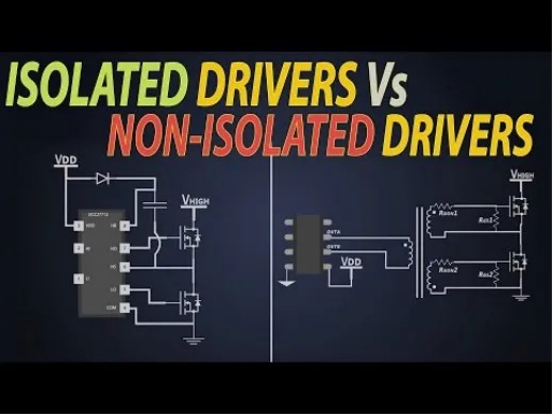
In commercial and industrial LED lighting, drivers have traditionally used transformers to step down voltage with isolation. However, non-isolated drivers are increasingly being adopted in modern applications.
Understanding Isolated Drivers
An isolated driver uses a transformer to step down high input voltage to a lower AC voltage, which is then rectified into DC output. The term "isolated" refers to the physical and electrical separation between the primary coil (high voltage) and the secondary coil (low voltage), which are not directly connected. This isolation provides a safety barrier between the high-voltage input and the low-voltage output.
Non-Isolated Drivers Explained
A non-isolated driver directly connects the load terminals to the input without using a transformer for voltage step-down. As a result, high AC voltage is directly supplied to the load side, leading to a simpler and more compact circuit design.
Key Differences
Safety Considerations
Isolated drivers are generally safer due to the electrical separation between the high-voltage input and the low-voltage output, reducing the risk of electric shock. Non-isolated drivers, however, expose the load terminals to high voltage, presenting a higher inherent risk.
Safety measures for non-isolated drivers include:
-
Proper connection of Class I grounding within the power supply system
-
Enhanced voltage protection for aluminum substrates (up to 3 kV)
Efficacy
Non-isolated drivers typically achieve higher efficiency, contributing to better overall luminaire efficacy compared to isolated drivers.
Luminaire Lifetime
Isolated drivers offer superior protection against power surges and voltage spikes, which can help extend the lifespan of LED components. The electrical isolation prevents high voltage from directly reaching the LED board, reducing the risk of damage.
Cost
Isolated drivers are generally more expensive due to their complex AC/DC flyback circuit structure, which supports multiple outputs. Non-isolated drivers use simpler DC/DC boost or buck circuits, resulting in lower costs. Thus, non-isolated drivers can reduce both the initial luminaire cost and operating costs thanks to their higher efficacy. However, the potentially longer lifespan of isolated drivers may also influence total cost of ownership. Overall, the cost trade-offs are complex: non-isolated drivers favor lower initial and energy costs, while isolated drivers may offer better long-term value in terms of luminaire lifetime.
Market Trends and Manufacturer Practices
As production technology matures, the market has shown growing acceptance of non-isolated drivers. Many manufacturers now offer both isolated and non-isolated solutions in their product lines. Some also provide customization options, allowing customers to select the driver type that best fits their specific requirements.
Conclusion
When choosing between isolated and non-isolated LED drivers, it is important to weigh the trade-offs in safety, efficiency, lifetime, and lifecycle costs. Isolated drivers provide enhanced safety and better protection for luminaire longevity, while non-isolated drivers offer cost savings and higher efficiency. The optimal choice depends on the specific application and safety requirements of the lighting project.